
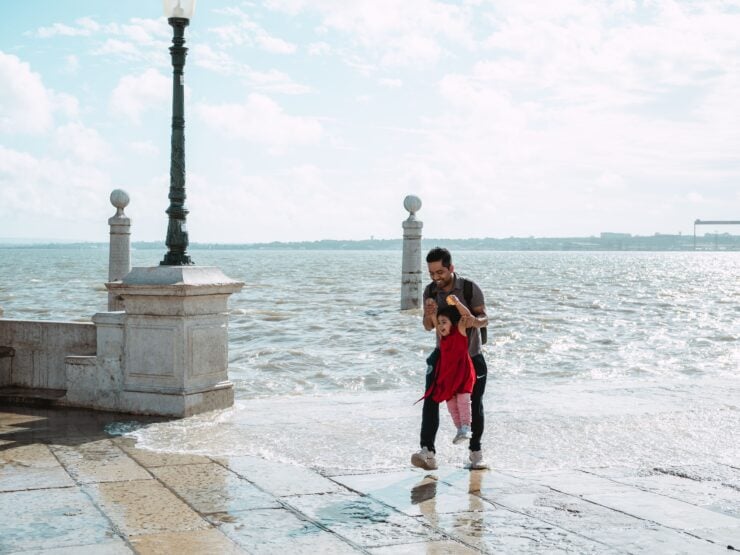
Moving to Portugal with Kids: A Guide for Canadian Families
Portugal is one of the most family-friendly countries in Europe: it is safe, relaxed and welcoming to children, with beaches, parks and a strong culture of family time. If you are moving to Portugal with kids from Canada, this guide covers visas, schools, healthcare, money and where families like to live, so you can plan the move with confidence.
Moving children overseas takes more planning than moving as a couple. The good news is that each step is manageable once you know the order, and most kids settle in faster than their parents expect.
Why Canadian Families Choose Portugal
- Safety: Portugal consistently ranks among the safest countries in the world, and children have more independence in many neighbourhoods.
- Lifestyle: mild weather, outdoor living, beaches and long family meals.
- Education options: free public schools plus a wide choice of international schools.
- Healthcare: a public health system for residents and affordable private care.
- Cost of living: daily costs are often lower than in Canada’s big cities. See cost of living in Portugal vs Canada.
Visas and Residency for Families
Most Canadian families move on a D7 (passive income) or D8 (digital nomad) visa, with one parent as the main applicant. Compare the options in our guide to Portugal residency for Canadians, or read the Portugal D7 visa and Digital Nomad visa guides.
Portugal tightened its family reunification rules in 2025, and most family members must now wait until the main applicant has held residency for two years. Minor children are exempt from that waiting period, so parents and children can usually move together. Spouses may be treated differently depending on your situation, so get advice from a Portuguese immigration lawyer before you apply.
Plan for higher income requirements too: visa income thresholds increase for each family member you include.
Documents to Prepare for Your Children
- Passports: valid for well beyond your planned stay
- Long-form birth certificates: showing both parents’ names, with an apostille
- Custody documents: if parents are separated or divorced, plus written consent from the other parent where needed
- School records: recent report cards and transcripts, ideally translated, to help with grade placement
- Vaccination records: your provincial immunization history, to share with your new doctor
- Medical records: summaries for any ongoing conditions or prescriptions
Canada has issued apostilles since joining the Hague Apostille Convention in 2024, which makes legalizing documents simpler. Our moving to Portugal checklist shows when to start each step.
Schools: Public, Private or International?
| Option | Language | Cost | Best for |
|---|---|---|---|
| Public school | Portuguese, with PLNM language support | Free | Younger children and long-term stays |
| Private Portuguese school | Mostly Portuguese | Moderate fees | Smaller classes, Portuguese curriculum |
| International school | English (British, American or IB curriculum) | Highest fees | Older children, shorter stays, easy return to Canada |
Public schools
Children living in Portugal have the right to attend public school, and education is compulsory from age 6 to 18. You enrol online through the Portal das Matrículas or at the local school. Students whose first language is not Portuguese can take Portuguese as a Non-Native Language (PLNM) at their level. See the official government guide to education for newcomers for details.
Younger children usually pick up Portuguese quickly. Teenagers can find the switch harder, especially in the final years of secondary school.
International schools
International schools are concentrated around Lisbon and Cascais, Porto and the central Algarve. Many teach in English and follow British, American or International Baccalaureate programs, which makes it easier to return to Canadian schools or apply to Canadian universities. Fees often range from around €8,000 to more than €25,000 a year, and popular schools have waiting lists, so apply as early as you can.
Daycare and Pre-School
Pre-school is optional and available from age 3, and basic education starts in the year a child turns 6. For babies and toddlers, Portugal has expanded free daycare (creche) places, though demand often exceeds supply. Many families also use private daycare or nannies, especially in the first months.
Healthcare for Children
- Public system: once you are legal residents, register each child at your local health centre for an SNS user number and family doctor.
- Vaccinations: Portugal has a national vaccination program. Bring your children’s immunization records so the doctor can match them to the Portuguese schedule.
- Private care: many families add private health insurance for faster access to paediatricians and specialists.
- Before residency: you will need private coverage for the visa application and until you can register.
Read our full guide to healthcare in Portugal for Canadians.
Money Matters for Families
- Canada Child Benefit: generally stops once you are no longer a resident of Canada for tax purposes.
- RESPs: you can usually keep the plan open, but government grants generally require the beneficiary to be a Canadian resident. Ask your provider before you leave.
- Portuguese family allowance: legal residents may qualify for the abono de família, depending on household income.
- School costs: budget for international school fees, uniforms, meals, activities and transport.
Best Places to Live in Portugal with Kids
- Cascais and Oeiras: beaches, parks, sports clubs and the largest cluster of international schools, with Lisbon nearby. See buying property in Cascais.
- Lisbon neighbourhoods: Campo de Ourique, Alvalade, Estrela and Parque das Nações are favourites with families. Read the best neighbourhoods in Lisbon.
- Porto: a big city with lower prices than Lisbon and good schools around Foz and Boavista. See the best neighbourhoods in Porto.
- The Algarve: outdoor living year-round, with international schools in the central Algarve. See buying property in the Algarve.
- The Silver Coast: more space for your money and a quieter pace, with fewer international school options.
Finding a Family Home
Most families rent first, then buy once they know which school and neighbourhood suit them. Look for homes within an easy commute of school, with outdoor space, good heating and a garage or parking. Our guides to renting vs buying in Portugal and house prices in Portugal will help you plan, and you can browse family-sized villas and current listings.
Tips for Moving to Portugal with Kids
- Visit together first: tour schools and neighbourhoods as a family.
- Time the move for summer: starting at the beginning of the school year makes it easier to make friends.
- Start Portuguese early: even a few months of lessons help children feel confident on day one. See learning Portuguese.
- Keep some routines from home: familiar activities, foods and video calls with family help children adjust.
- Get involved: sports clubs, scouts and music schools are great ways for kids and parents to meet people.
Moving to Portugal with kids is a big step, but with planning it can be the start of a wonderful new chapter for the whole family.
FAQs: Moving to Portugal with Kids
Can my children come with me on a D7 or D8 visa?
Yes. Minor children are exempt from the two-year waiting period that now applies to most family reunification in Portugal, so families usually move together. They still need apostilled birth certificates, accommodation and proof of sufficient means, so confirm the process for your case with a Portuguese immigration lawyer.
Can foreign children go to public school in Portugal for free?
Yes. Children living in Portugal have the right to attend public school, and education is compulsory from age 6 to 18. Students who do not speak Portuguese get extra language support through the Portuguese as a Non-Native Language (PLNM) program.
How much do international schools in Portugal cost?
Fees vary widely by school, grade and location. Many international schools in Lisbon, Cascais, Porto and the Algarve charge from around €8,000 to more than €25,000 a year, plus enrolment and other fees.
When does the school year start in Portugal?
The school year usually starts in mid-September and runs until June, with breaks at Christmas, Carnival and Easter. Arriving in summer makes the transition easiest, but children can enrol during the year.
Will I still get the Canada Child Benefit if we move to Portugal?
Usually not. The Canada Child Benefit is generally only paid while you are a resident of Canada for tax purposes, so payments normally stop after you become a non-resident. Ask the CRA or a cross-border tax adviser about your situation.
What is the best place to live in Portugal with kids?
Many Canadian families choose Cascais, Oeiras or residential Lisbon neighbourhoods for international schools, or Porto and the Algarve for space and value. The best fit depends on your budget, schooling plans and lifestyle.
Talk to a Portugal Property Specialist
Every move is different. If you are a Canadian thinking about buying in Portugal, get in touch with Annamarie for a no-pressure conversation, or tell us what you are looking for on our Help Me Find a Property page.
Header photo: Sonse, CC BY 2.0.
This article is general information, not legal, tax or financial advice. Rules change often, so confirm details for your situation with a qualified professional.