
Portugal vs Florida for Snowbirds: A Winter Guide for Canadians
For decades, Florida was the default winter escape for Canadians. That is changing. New U.S. border rules, the cost of converting Canadian dollars to U.S. dollars and rising Florida insurance costs have many retirees comparing Portugal vs Florida for snowbirds, and asking whether a winter in the Algarve or Madeira could replace a winter in Naples, Sarasota or Fort Lauderdale.
Both are great places to spend the cold months, but they are very different. This guide compares weather, how long you can stay, costs, health coverage, taxes and owning a winter home, so you can decide which one fits your retirement. If Portugal is already on your list, start with our main guide to snowbirding in Portugal.
Portugal vs Florida for Snowbirds at a Glance
Here is how the two compare on the things Canadian snowbirds ask about most.
| Factor | Portugal (Algarve) | Florida |
|---|---|---|
| January daytime high | About 16°C to 17°C (about 19°C in Madeira) | About 22°C to 25°C, warmest in the south |
| Visa-free stay | 90 days in any 180-day period (whole Schengen area) | Usually up to 6 months per visit |
| Registration | EU entry/exit system scans fingerprints and photo at the border | U.S. registration required for stays of 30 days or more |
| Flight from Toronto | About 7 hours nonstop to Lisbon, 5 hours time difference | About 2.5 to 3 hours, same time zone as Ontario |
| Currency | Euro | U.S. dollar |
| Annual property tax | IMI: 0.3% to 0.45% of the tax value (usually below market value) | Often about 1.5% to 2% of assessed value for non-residents |
| Driving | Rent a car, or use trains and buses | Most snowbirds drive down with their own car |
| Lifestyle | Walkable old towns, cafés, history, a European pace | Golf communities, big stores, a familiar North American feel |
Winter Weather: How Warm Is It Really?
This is the biggest trade-off, so be honest with yourself about it. Florida is warmer. In January, daytime highs average around 22°C in central Florida and about 24°C to 25°C in Miami and the southwest coast, warm enough for the pool most days.
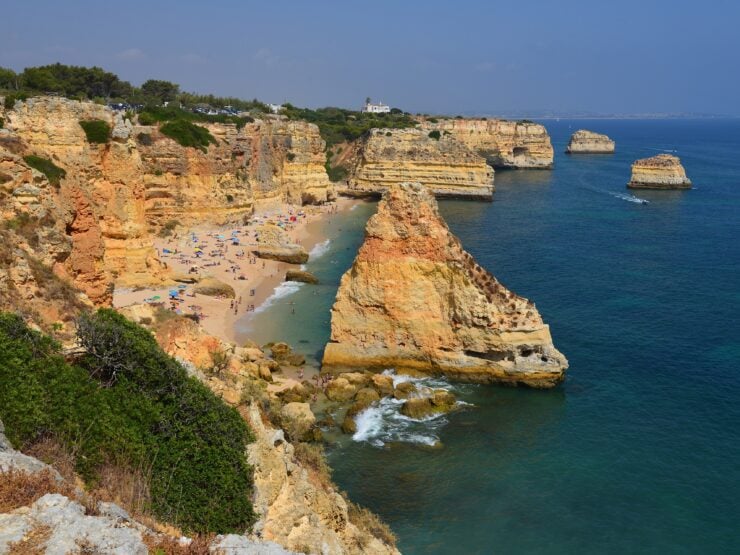
The Algarve is mild rather than hot. In Faro, January highs average about 16.5°C with lows around 8°C, warming to about 19°C by March. The Algarve gets about six hours of sunshine a day in mid-winter, and most days are dry and bright. It is perfect weather for walking, golf and long lunches on a terrace, but the ocean is around 16°C, so few people swim.
If you want more warmth, Madeira has the mildest winters in Portugal, with spring-like weather almost all year. See our guide to buying property in Madeira. One thing to plan for: many Portuguese homes have little insulation or central heating, so choose a rental with heat pumps or air conditioning that heats.
How Long Can Canadians Stay?
Portugal: 90 days in 180
Canadians can visit Portugal without a visa for up to 90 days in any 180-day period. The limit covers the whole Schengen area, so days in Spain or France count too. The EU’s Entry/Exit System now records your fingerprints and photo at the border, which makes overstays easy to spot. A pre-travel authorization called ETIAS (about €20) is planned but has no confirmed start date yet, so check the official EU travel site before each trip.
Ninety days is enough for a classic December to February winter. If you want four to six months, you need a residence visa such as the D7 passive income visa, or you can split your winter between Portugal and a non-Schengen country such as Morocco or the U.K. Owning a home in Portugal does not extend the 90-day limit.
Florida: up to six months, with new paperwork
Canadian visitors are usually admitted to the U.S. for up to six months. Since April 2025, Canadians staying 30 days or longer must also register with the U.S. government. Days count for tax purposes too (see the tax section below), so most Florida snowbirds keep a careful count.
Getting There and Getting Around
Florida wins on convenience. Flights from Ontario take under three hours, there is no time difference, and many snowbirds simply drive down with their own car, golf clubs and all.
Portugal takes more planning. Air Canada, TAP Air Portugal and Air Transat fly nonstop from Toronto and Montreal to Lisbon in about seven hours, and you can connect to Faro or Madeira or take the train south. Lisbon is five hours ahead of Ontario in winter, so calls home take a little juggling. Once you arrive, you can rent a car (bring an International Driving Permit from CAA with your provincial licence) or rely on trains, buses and walkable town centres.
What a Winter Costs
For many Canadians, cost is what tips the balance toward Portugal. Day-to-day spending on groceries, eating out, coffee and public transit is generally lower in Portugal than in Florida or Canada. A three-course lunch menu at a local restaurant often costs less than a single entrée at a Florida chain.
Accommodation is the other big piece. Florida winter rentals are peak-season rentals, priced in U.S. dollars. In the Algarve, winter is the low season, and many owners offer monthly rates from October to April that are well below summer prices. Your dollars convert to euros instead of U.S. dollars, so compare exchange rates for your own budget.
- Usually cheaper in Portugal: food, dining out, transit, winter rentals, property tax and travel medical insurance.
- Usually cheaper in Florida: flights, driving your own car, and heating (you rarely need it).
- Watch in both: condo or HOA fees, home insurance and currency conversion fees.
For a full breakdown, see the cost of living in Portugal vs Canada.
Health Coverage and Travel Insurance
Wherever you go, your provincial plan sets the limit on time away. Ontario, for example, generally allows up to 212 days outside Canada in a 12-month period while keeping OHIP. Check your own province’s rule before you book.
Provincial plans pay very little outside Canada, so travel medical insurance is essential in both places. U.S. medical bills are among the highest in the world, and insurers usually charge more for U.S. coverage than for Europe. In Portugal, private clinics and hospitals are modern and much less expensive, and many staff speak English. Read more about healthcare in Portugal for Canadians.
Taxes for Snowbirds in Portugal vs Florida
Florida and the U.S. day count
The U.S. uses a three-year formula: all of this year’s days, plus a third of last year’s and a sixth of the year before. If the total reaches 183, you meet the substantial presence test and must file Form 8840 (the Closer Connection Exemption Statement) each year to stay out of the U.S. tax system. In practice, that applies if you average roughly four months a year in the U.S.
Portugal
Spending less than 183 days a year in Portugal, without making it your main home, generally keeps you a Canadian tax resident only. Your CPP and OAS keep arriving as usual. If you rent out a winter home in Portugal while you are back in Canada, that rental income is taxable in Portugal and must also be reported to the CRA.
Owning a Winter Home: Portugal vs Florida
About half of Canadian snowbirds in the U.S. own property there, so this is a big part of the decision. Here is how ownership compares.
- Property tax: Portugal’s IMI is 0.3% to 0.45% a year of the official tax value, which is usually below market value. Florida property taxes for non-residents, who cannot claim the homestead exemption, often run about 1.5% to 2% of assessed value.
- Insurance: Florida home insurance is among the most expensive in the U.S. because of hurricane risk. Portugal’s home insurance is generally modest.
- Selling: when a Canadian sells U.S. property, the buyer usually must withhold 15% of the price for the IRS (FIRPTA) until you file. Portugal taxes non-residents on half of the gain at progressive rates. See our guide to selling property in Portugal.
- Estate planning: Canadians with more than US$60,000 of U.S. assets may face U.S. estate tax filings at death, though the Canada-U.S. treaty can reduce the tax. Portugal has no inheritance tax as such, and spouses, children and parents are exempt from the 10% stamp duty other heirs pay.
- Buying costs: Portugal has transfer tax (IMT), stamp duty and notary fees. See property taxes and closing costs.
Both countries let Canadians buy freely. A winter home you use yourself does not go on the CRA’s Form T1135, but a home you rent out counts toward its $100,000 foreign property reporting threshold. Many owners in Portugal rent their home out in summer, subject to short-term rental rules. If you are not ready to commit, read renting vs buying in Portugal.
Lifestyle: Which Winter Suits You?
Florida feels familiar. You will find Canadian neighbours, Tim Hortons, big-box stores, gated golf communities and English everywhere. It is easy, and for many people that is the point.
Portugal feels like a change of life. Winter days in the Algarve mean coastal walks, fresh fish lunches, Saturday markets and old towns like Tavira and Lagos with growing winter communities of Canadians and other Europeans. Lisbon, Seville and Morocco are short trips away, and the pace is slower. English is widely spoken in the Algarve, though learning a little Portuguese goes a long way. Compare towns in our guide to the best places to retire in Portugal, or explore the Algarve region.
Is Portugal or Florida Right for You?
Use this quick checklist to see which way you lean.
- Choose Florida if: you want real heat and swimming weather, like to drive down with your own car, want to stay close to family, or plan to stay longer than three months without a visa.
- Choose Portugal if: you prefer mild, sunny weather to hot, want lower day-to-day costs and property taxes, enjoy walkable towns and culture, and are happy with 90 days or willing to apply for a residence visa.
- Try both: rent in the Algarve for one winter before you sell a Florida condo or buy anywhere.
When you are ready to look, browse Portugal homes for sale.
Also considering Spain for the winter? Read Portugal vs Spain for Canadians.
FAQs: Portugal vs Florida for Snowbirds
Is Portugal cheaper than Florida for snowbirds?
For most Canadians, yes. Winter rentals, groceries, dining out, property tax and travel medical insurance usually cost less in Portugal, while flights and driving your own car are cheaper for Florida.
Is Portugal warm enough in winter compared to Florida?
Portugal is milder than Florida, not hotter. January highs in the Algarve average about 16°C to 17°C with plenty of sun, while Florida averages about 22°C to 25°C. Madeira is the warmest part of Portugal in winter.
How long can Canadian snowbirds stay in Portugal?
Up to 90 days in any 180-day period across the whole Schengen area. To stay longer, you need a residence visa such as the D7.
Do Canadian snowbirds need to register in the U.S.?
Yes. Since April 2025, Canadians staying in the U.S. for 30 days or longer must register with the U.S. government, in addition to watching the day count for U.S. tax rules.
Can Canadians buy a winter home in Portugal?
Yes. There are no restrictions on Canadians buying property in Portugal. You need a Portuguese tax number (NIF), and most buyers also open a Portuguese bank account.
Is travel insurance cheaper for Portugal than Florida?
Usually, yes. Because U.S. medical costs are so high, insurers typically charge more to cover a winter in the U.S. than a winter in Europe. Compare quotes for your age and health.
Talk to a Portugal Property Specialist
Thinking about trading Florida for Portugal, or adding a Portuguese winter home to your plans? Get in touch with Annamarie for a no-pressure conversation, or tell us what you are looking for on our Help Me Find a Property page.
Header photo: Tobi 87, CC BY-SA 3.0.

This article is general information, not legal, tax, immigration or financial advice. Border, tax and insurance rules in Portugal, the U.S. and Canada change often and depend on your personal situation. Confirm your position with a cross-border tax accountant, your provincial health plan and your insurer before you travel or buy.
Have more questions?