
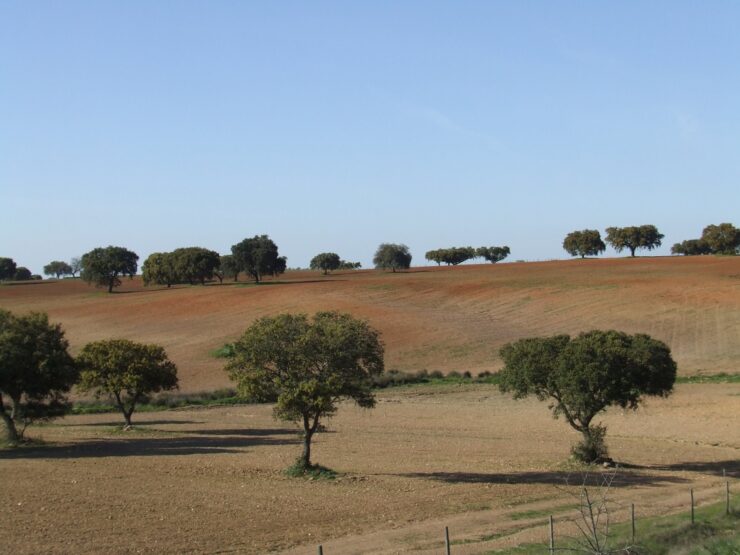
Buying Land in Portugal: A Guide for Canadian Buyers
A plot with olive trees, a view, and a home you design yourself: buying land in Portugal is a dream many Canadians share, and land can look like a bargain next to Canadian prices. But in Portugal, the price of a plot says very little about what you can actually build on it.
This guide explains how buying land in Portugal works for Canadians: the difference between rustic and urban land, how to find out whether you can build, the checks to make before you pay a deposit, and what taxes, building costs and timelines to expect.
Rustic vs Urban Land: The Most Important Difference
Every plot in Portugal is classified for tax and planning purposes. The classification decides almost everything about what you can do with it.
- Urban land (terreno urbano): land that is already developed or set aside for development in the municipal plan. Urban plots marked for construction (“para construção”) are where new homes are normally built.
- Rustic land (terreno rústico): land intended for farming, forestry or nature. It is much cheaper, but building a new home on it is usually not allowed.
- Mixed property (misto): a rustic plot with an existing urban part, such as a farmhouse or a registered ruin. These can be a good middle ground.
The most common and expensive mistake foreign buyers make is buying a cheap rustic plot assuming they will get permission to build. Often, they won’t.
Can You Build on Rustic Land in Portugal?
Usually not a new house from scratch. What you can build depends on the municipality’s master plan (the PDM, or Plano Diretor Municipal) and on national protections that sit on top of it:
- RAN (Reserva Agrícola Nacional): protected agricultural land, where building is heavily restricted.
- REN (Reserva Ecológica Nacional): protected ecological land, such as flood zones, coastal areas and steep slopes.
- Natural parks, coastal rules, forest rules and heritage zones can add further limits.
There are exceptions. An existing building that is legally registered on the property, even a ruin, can often be rebuilt or extended within limits. Agricultural support buildings may be allowed. A 2024 law also lets municipalities reclassify some rustic land for housing, but it is aimed mainly at affordable housing and does not make an ordinary rustic plot buildable.
The safe assumption: if a seller says you “should be able to build,” get it confirmed in writing by the municipality before you commit.
Due Diligence Before You Buy Land
Land needs more checking than a finished home. Before you sign a promissory contract (CPCV) or pay a deposit, your lawyer and architect should review:
- Caderneta predial: the tax record showing the plot’s classification (rustic, urban or mixed), area and taxable value.
- Certidão permanente: the land registry certificate, confirming the owner and any mortgages, liens or rights of way.
- PDM extract: the municipal plan zoning for the plot, including any RAN or REN restrictions.
- Boundaries and survey: in many rural areas, the registered area doesn’t match reality. A topographic survey confirms what you are buying. Rustic plots in areas without a land survey can be mapped through the national BUPi system.
- Access: confirm legal road access, not just a track across a neighbour’s land.
- Water: check mains water, or whether there is a licensed well or borehole. Drilling a new borehole must be registered with the environment agency (APA).
- Electricity and sewage: connecting a remote plot to the grid or installing an approved septic system can cost tens of thousands of euros.
- Wildfire rules: owners must keep vegetation cleared around buildings in rural areas, usually a 50-metre strip. Factor in this ongoing cost.
Your lawyer will also check that the seller’s paperwork matches across the tax office, land registry and municipality. Our guide to the legal process of buying property in Portugal covers the full sequence.
Use a PIP to Confirm What You Can Build
The single best protection when buying land is a PIP (Pedido de Informação Prévia). It is a formal request to the municipality (Câmara Municipal) asking whether a specific project is allowed on the plot, including the size, height and use of the building.
A favourable PIP is binding on the municipality for a set period, which gives you real certainty before you buy. It usually takes one to four months and is prepared by an architect. Many buyers make their purchase conditional on a positive PIP. If a seller won’t accept that condition, treat it as a warning sign.
Taxes and Costs When Buying Land
Land is taxed differently from homes:
| Cost | Rustic land | Urban land |
|---|---|---|
| IMT (property transfer tax) | 5% | 6.5% |
| Stamp duty | 0.8% | 0.8% |
| Annual IMI (property tax) | 0.8% of taxable value | 0.3% to 0.45% of taxable value |
IMT is charged on the higher of the purchase price or the plot’s taxable value. Add notary and registration fees, plus your lawyer, usually around 1% of the price. Our Portugal property taxes and closing costs guide explains each cost in detail. You will need a Portuguese tax number first. See how Canadians get a NIF.
What It Costs to Build a Home in Portugal
As a working guide in 2026, a standard new-build home costs roughly €1,100 to €1,700 per square metre to build, not counting the land, taxes, design fees, utility connections or landscaping. High-end finishes, pools and difficult sites cost more. Construction costs have been rising, so build in a 10% to 15% contingency.
Hire an architect who already works with the local municipality. In Portugal the architect usually leads the project, from feasibility to drawings to the permit application.
How Long It Takes
Building in Portugal is a long project. Typical timelines are:
- Legal and planning checks: 2 to 8 weeks
- Design and engineering projects: 2 to 5 months
- Municipal approval: 3 to 12 months or more
- Finding and contracting a builder: 1 to 3 months
- Construction: 12 to 24 months
Overall, plan on 18 months to three years from finding a plot to moving in. If you are applying for a D7 visa, you will need somewhere else to live in the meantime.
Financing Land in Portugal
Portuguese banks rarely lend on bare land, and lending to non-residents is limited even for finished homes. Most Canadians buy land with cash, then finance the build with savings or a construction loan once permits are approved. Our guide on whether Canadians can get a mortgage in Portugal explains what banks will lend.
Land vs Buying a Ruin or a Finished Home
For many Canadians, buying land is not the fastest or cheapest path to the home they want:
- A registered ruin or farmhouse on a mixed property often comes with building rights that bare rustic land lacks.
- Off-plan or new construction lets you choose finishes without managing a build. See buying off-plan property in Portugal.
- A finished home lets you move in on day one and start your residency application with proof of accommodation.
Land makes the most sense if you have time, a clear vision, and a local architect and lawyer you trust.
Where Canadians Look for Land
Land prices vary widely. The interior of Central Portugal and the Alentejo offer the most space for the money. The Silver Coast balances price and ocean access, while building plots in the Algarve and around Lisbon are scarce and expensive. Our Algarve vs Silver Coast comparison and best areas for Canadian buyers can help you narrow it down. You can also browse current land listings.
For official, up-to-date information, see ePortugal, the Portuguese government’s public services portal.
FAQs: Buying Land in Portugal
Can Canadians buy land in Portugal?
Yes. There are no restrictions on Canadians or other foreigners buying land in Portugal. You need a Portuguese tax number (NIF), and a Portuguese bank account makes the process easier.
Can I build a house on rustic land in Portugal?
Usually not a new house. Rustic land is meant for farming, forestry or nature. You may be able to rebuild or extend a legally registered existing building, but you should confirm what is allowed with the municipality, ideally through a PIP, before you buy.
What is a PIP in Portugal?
A PIP (Pedido de Informação Prévia) is a formal request asking the municipality whether a specific building project is allowed on a plot. A favourable PIP is binding for a set period, so it is the best way to confirm you can build before you buy.
How much does it cost to build a house in Portugal?
As a rough guide in 2026, a standard new-build costs about €1,100 to €1,700 per square metre, not including the land, taxes, design fees or utility connections.
What taxes do you pay when buying land in Portugal?
IMT is 5% for rustic land and 6.5% for urban land, plus 0.8% stamp duty, charged on the higher of the price or the taxable value. Annual IMI is 0.8% for rustic land and 0.3% to 0.45% for urban land.
Can I get a mortgage to buy land in Portugal?
It is difficult. Portuguese banks rarely lend on bare land, especially to non-residents. Most Canadians pay cash for land and finance construction separately.
Talk to a Portugal Property Specialist
Land in Portugal can be a great opportunity or an expensive lesson, and the difference is usually in the checks you make before you buy. If you are a Canadian looking at land, a ruin or a home to renovate, get in touch with Annamarie for a no-pressure conversation, or tell us what you are looking for on our Help Me Find a Property page.
This article is general information, not legal, tax or planning advice. Building rules vary by municipality and change over time. Confirm what is allowed on any plot with a Portuguese lawyer, an architect and the local Câmara Municipal before you buy.
Have more questions?